If you or someone in your whānau needs nursing care but would prefer to remain at home, you may have come across the term home nursing. But what does it actually mean in New Zealand?
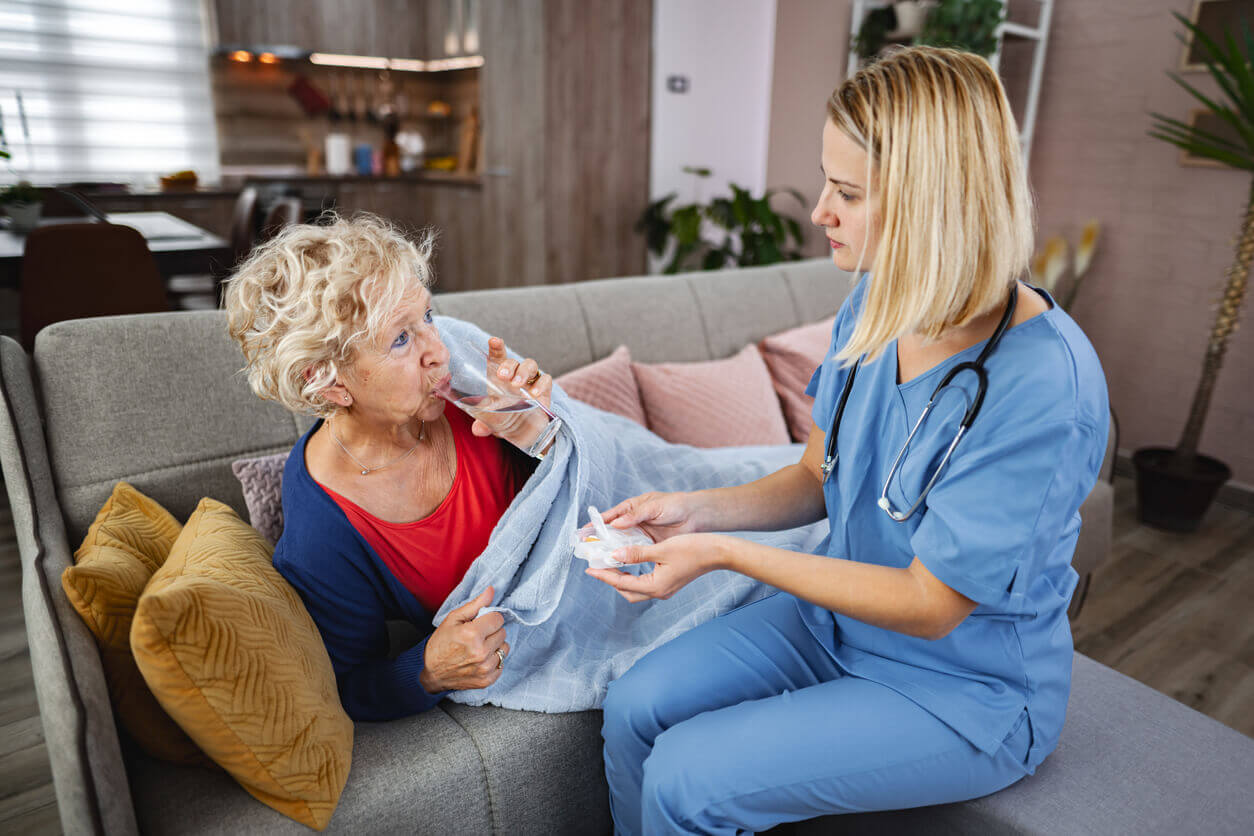
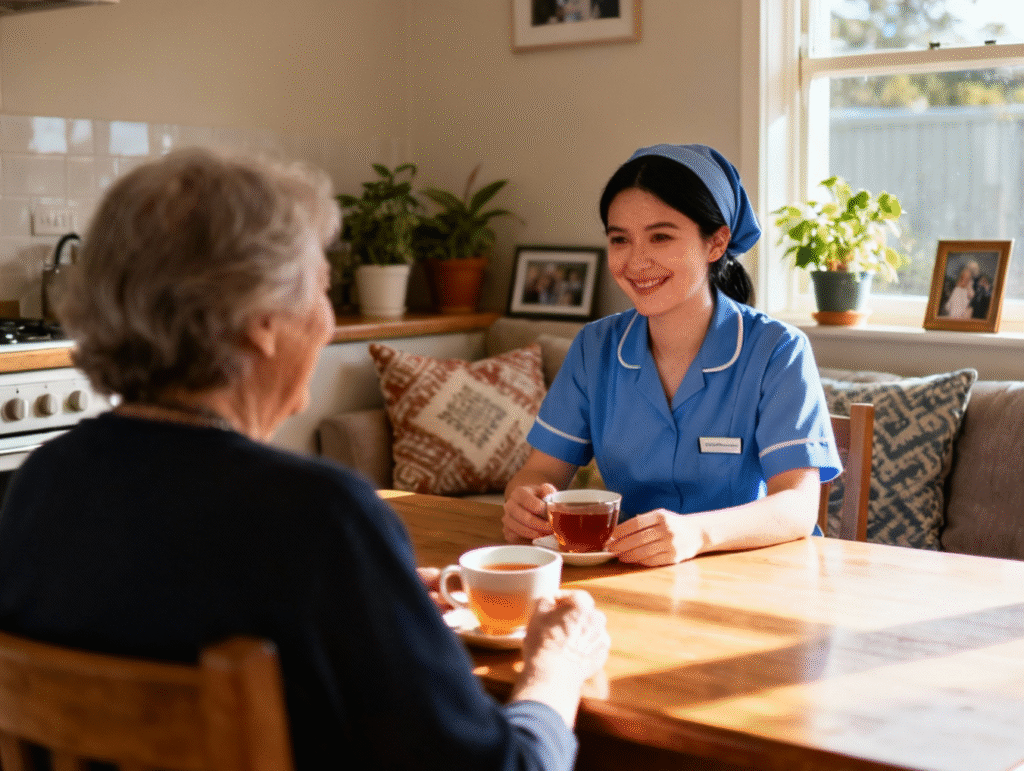
Home nursing is nursing care provided in a person’s home or community setting rather than in a hospital or residential facility. It can include clinical care such as wound management, catheter care, medication support, intravenous treatment and palliative care, depending on the person’s needs and the service available in their area. District nurses are one of the main ways this care is delivered through the public health system.
The important point is that home nursing is not simply another name for having someone help with housework or personal care. Those services can form part of broader home support, but nursing involves assessment, clinical judgement and nursing interventions.
What is home nursing in New Zealand?
Home nursing means a qualified nurse provides healthcare to a person in their usual home or another community setting.
In New Zealand, this is often called district nursing or community nursing. Health New Zealand describes district nurses as registered nurses working in the community who may visit people who cannot leave their homes, provide follow-up after hospital discharge, manage wounds, provide catheter and continence care, support medication needs and provide palliative care.
The exact service varies between regions. For example, Health New Zealand district nursing services in Wellington, Hutt and Kāpiti list wound treatment, home medication administration, respiratory support, feeding-tube care, continence services, IV therapy and palliative care among their services.
So, rather than thinking of home nursing as one standard package, it is more useful to think of it as clinical nursing care adapted to a person’s needs at home.
 Complete Guide to Home Nursing in New Zealand
What does a home nurse do?
The care provided depends on the person’s condition, treatment plan and the nurse’s scope of practice.
Examples can include:
- Assessing a person’s health and nursing needs
- Caring for wounds, including complex or chronic wounds
- Managing or caring for urinary catheters
- Providing continence assessment and support
- Administering certain medicines or injections
- Providing IV therapy where appropriate
- Supporting people after hospital treatment
- Helping manage some long-term health conditions
- Providing specialist nursing care
- Supporting people receiving palliative or end-of-life care
- Educating patients and whānau about aspects of ongoing care
These are not necessarily available from every service or in every location. Health New Zealand services differ by region and clinical need. For instance, Northland’s home healthcare nursing service provides wound management, continence support, palliative care and post-hospital follow-up, while Southern district nursing also provides services such as oncology care, bowel care and urinary catheter care.
A registered nurse’s role is broader than carrying out individual tasks. The Nursing Council of New Zealand states that registered nurses assess health needs, develop care plans, determine appropriate interventions and evaluate outcomes within their education, competence and scope of practice.
That clinical assessment is one of the main differences between nursing care and ordinary household assistance.
Who might need nursing care at home?
Home nursing can be useful in many situations. It is not limited to older people.
Someone may receive nursing care at home while:
- Recovering after a hospital stay or procedure
- Managing a wound that needs professional treatment
- Living with a long-term health condition
- Requiring ongoing catheter or continence care
- Receiving palliative or end-of-life care
- Recovering from an injury covered by ACC
- Receiving specialist treatment that can safely be provided in the community
For example, a person discharged from hospital may be well enough to sleep in their own bed but still need a nurse to monitor a wound, provide treatment or help coordinate ongoing care.
In other cases, home nursing may be part of longer-term community care rather than a short recovery period.
The level and duration of care should be based on an assessment of the person’s needs rather than simply their age or diagnosis.
Home nursing vs home support: what’s the difference?
These terms are easy to confuse.
Home nursing is primarily clinical. A nurse may assess a wound, manage a catheter or provide prescribed nursing treatment.
Home support is broader and may involve practical assistance with everyday activities. Health New Zealand lists examples such as help with getting out of bed, showering, dressing, taking medicines, cleaning and meal preparation.
A person can receive both.
| Home nursing | Home support |
|---|---|
| Clinical healthcare | Practical day-to-day assistance |
| Provided by appropriately qualified nursing staff | May be provided by support workers or other carers |
| Wound and catheter care are examples | Showering, dressing and household help are examples |
| Involves nursing assessment and clinical care | Focuses on independence and daily living |
| May be short-term or ongoing depending on need | May also be short-term or ongoing |
The two services can work together. Someone recovering from surgery, for example, might need a nurse to monitor their clinical recovery while a support worker helps with showering or household tasks.
Nursing Care at Home vs Home Support in New Zealand
Is home nursing the same as living in a nursing home?
No.
Home nursing allows a person to remain living in their own home while receiving nursing care. A nursing home or other residential care facility involves moving into a facility where care is provided as part of the residential setting.
This distinction matters because people sometimes use “nursing care” and “nursing home” interchangeably. They are not the same thing.
Someone may receive occasional visits from a district nurse while continuing to live independently. Another person with substantially greater support needs may eventually require residential care. The appropriate arrangement depends on their health, safety, functional ability and assessed care needs.
home care vs nursing home care
How do you get home nursing in NZ?
The pathway depends on why nursing care is needed.
For publicly provided district nursing, a healthcare professional or hospital may make a referral. Some Health New Zealand services specify that care is provided following referral and a needs assessment.
A typical pathway may look like this:
- Discuss the need with a healthcare professional. This could be a GP, hospital team, nurse practitioner or another appropriate healthcare provider.
- Referral is made to the relevant community or district nursing service.
- A nurse assesses the person’s needs.
- A care plan is developed or coordinated.
- The nurse provides the appropriate care at home, with follow-up depending on the person’s condition and goals.
- Care may end or change when the person’s needs change or another service becomes more appropriate.
The exact process varies around New Zealand. Local services may have different referral arrangements and operating hours.
If the need is related to an injury, ACC has a separate nursing service providing community-based nursing care, typically in the person’s home, when injury-related nursing needs cannot be managed by their general practice team. ACC says its nursing service is fully funded for eligible clients.
Is home nursing free in New Zealand?
There is no single answer because funding depends on the person’s circumstances and the type of service.
Some publicly funded district nursing services are provided without a fee. For example, Health New Zealand’s Wellington, Hutt and Kāpiti community nursing service states that there is no fee for home-based care provided by its district nurses.
Health New Zealand also funds certain home support services following an assessment of needs and eligibility. A Needs Assessment Services Co-ordination (NASC) organisation may assess a person’s support needs and help coordinate appropriate services.
ACC-funded nursing is another pathway for eligible injury-related care.
There are also private home nursing services, where the individual pays for care or may use another funding arrangement. The previous assumption that all home nursing in New Zealand is either free or government funded is therefore too simplistic.
If you are considering private care, ask the provider for a written explanation of what is included, how nurses are qualified, how visits are charged and whether there are additional costs for travel, equipment or supplies.
Private Home Nursing and Insurance
What should you ask before arranging home nursing?
If you’re comparing services, a few practical questions can prevent confusion later.
Ask:
- What type of nurse will provide the care?
- Is the service publicly funded, ACC-funded or private?
- Do I need a referral?
- What clinical services can the provider actually provide?
- How often will visits take place?
- What happens if my needs change?
- Who should I contact outside normal visiting hours?
- Are there costs for equipment, supplies or travel?
- How will my GP, hospital team or other healthcare providers be kept informed?
It is also reasonable to ask how the service supports cultural needs, communication preferences and whānau involvement.
For nurses working in New Zealand, registration and a current practising certificate are important safeguards. The Nursing Council requires nurses practising in Aotearoa New Zealand to be registered, work within their scope of practice, meet competence standards and hold an annual practising certificate.
What if you are not sure which service you need?
You do not need to work out the entire health system yourself.
If you think you or a family member needs nursing care at home, start with the person’s GP, usual healthcare provider or hospital team and explain what has changed.
Be specific. Instead of simply saying, “We need home care,” explain what is happening: for example, “Dad has been discharged from hospital and needs his wound dressed,” or “Mum can no longer manage her catheter independently.”
That information helps the healthcare team determine whether district nursing, home support, rehabilitation, palliative care or another service is appropriate.
If the need is related to an ACC-covered injury, contact the ACC recovery team or the relevant healthcare provider about available support. ACC also has specific pathways for nursing and home-and-community support.
Who Qualifies for Home Nursing in NZ
Frequently Asked Questions
What is home nursing in New Zealand?
Home nursing is clinical nursing care provided in a person’s home or community setting. In New Zealand, it is often delivered through district or community nursing services and may include wound care, catheter care, medication support, IV therapy, post-hospital care and palliative nursing, depending on local services and individual needs.
What does a district nurse do?
A district nurse is a community-based nurse who provides care to people in their homes or community clinics. Their work can include wound management, continence and catheter care, medication support, follow-up after hospital discharge and palliative care.
Is home nursing only for elderly people?
No. People of different ages may need nursing care at home, including people recovering after hospital treatment, managing long-term conditions, receiving palliative care or recovering from an injury.
Is home nursing the same as home help?
No. Home nursing is clinical healthcare provided by nursing professionals. Home help is generally practical support such as cleaning, meal preparation or assistance with everyday activities. A person may receive both types of support.
Does ACC cover home nursing?
ACC can fund eligible injury-related nursing services. Its Nursing Services programme provides community-based nursing care, typically at home, for injury-related needs that cannot be managed by the person’s general practice team.
Can I arrange private home nursing?
Yes. Private providers may offer nursing services for people who want to pay directly or who have another funding arrangement. Services, availability and pricing vary, so check the provider’s terms before care begins.
Do I need a referral for home nursing?
Often, yes, particularly for public district nursing. Referral arrangements vary between services. Some ACC pathways also allow self-referral in particular circumstances.
Can home nursing replace a hospital?
Not necessarily. Home nursing is suitable only when the person’s condition and care needs can be safely managed in the community. If someone becomes seriously unwell or needs urgent hospital-level treatment, their healthcare team may recommend hospital care instead.
Final Takeaway
Home nursing in New Zealand means receiving professional nursing care while continuing to live at home. District nurses and other community nurses can provide a wide range of clinical services, from wound and catheter care to post-hospital support and palliative care.
It is also important to separate nursing from general home support. They can overlap, but they are not the same service.
If you think home nursing could help you or someone in your whānau, the most useful next step is usually to speak with the person’s GP, healthcare provider or hospital team. They can help identify the appropriate service, arrange an assessment or referral, and explain what funding may apply.
Sources
- Health New Zealand — Nurses and district nursing information
- Health New Zealand — Home support services for older people and others
- Health New Zealand — Community nursing services
- ACC — Nursing Services
- ACC — Recovery services directory
- Nursing Council of New Zealand — Practising as a nurse
- Nursing Council of New Zealand — Registered nurse scope of practice