
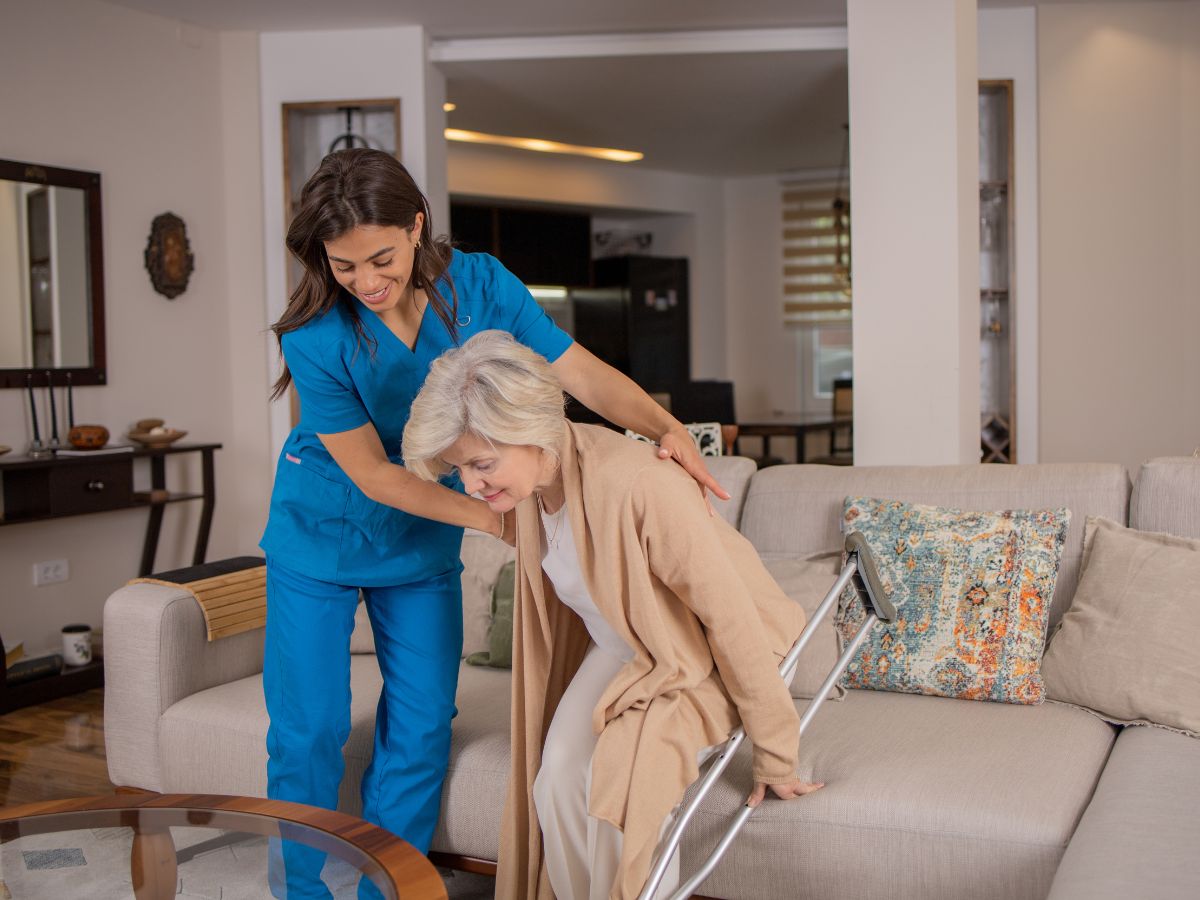
If you’re comparing home nursing vs nursing home care, the biggest difference is simple: home nursing brings professional nursing care to a person’s own home, while residential care means living in a facility where accommodation and ongoing care are provided together.
Neither option is automatically “better”. The right choice depends on the person’s health needs, safety, independence, support network and how much care is required.
In New Zealand, there is also an important terminology point. What people commonly call a “nursing home” may actually be a rest home, private hospital, dementia facility or another form of aged residential care. These facilities do not all provide exactly the same level of care.
Home nursing vs nursing home: the key difference
Home nursing is a healthcare service delivered where the person lives. A nurse may visit to provide wound care, catheter or stoma management, medication-related care, intravenous treatment, palliative care or other clinically appropriate services. District nursing is one example of community-based nursing in New Zealand.
Residential care, by contrast, involves moving into a care facility. The facility provides accommodation alongside care and support. Depending on the person’s assessed needs, this might be rest-home-level care, hospital-level care or specialist dementia care.
| Factor | Home nursing | Residential care / “nursing home” |
|---|---|---|
| Where care happens | Person’s own home | Rest home, private hospital or other residential facility |
| Living arrangement | Person remains at home | Person moves into the facility |
| Main purpose | Provides nursing or health support while living at home | Provides accommodation plus ongoing care |
| Nursing | Usually provided during scheduled visits or agreed services | Nursing and care are provided within the residential service, according to the level of care required |
| Independence | Can allow a person to remain in familiar surroundings | Daily life takes place within a structured care environment |
| Family involvement | Often remains significant | Whānau can remain involved, but day-to-day care is provided by the facility |
| Best fit | Someone who can safely remain at home with appropriate support | Someone whose needs can no longer be safely or appropriately managed at home |
The table is a useful starting point, but the distinction is more nuanced than “home care is for people with low needs and nursing homes are for people with high needs”.
For example, a person living at home may have a complex medical condition but only require a nurse to visit for specific clinical tasks. Conversely, someone in residential care may need substantial help with everyday activities without requiring continuous nursing interventions.
What does home nursing actually involve?
Home nursing is sometimes confused with home help or personal care. They overlap in the wider home-support system, but they are not necessarily the same service.
Health New Zealand describes home support as including help with activities such as getting out of bed, showering, dressing, taking medicines, household tasks and other support that can help a person remain at home.
Clinical nursing is different. Depending on the service and the person’s needs, nursing at home can include things such as:
- wound and dressing care
- catheter management
- stoma care
- continence assessment
- intravenous medication or treatment
- palliative care
- monitoring and education
- support with complex health conditions.
Health New Zealand’s district nursing services, for example, provide specialist community nursing for needs including wound care, IV management, palliative care, catheter management and complex-condition management.
This distinction matters when you’re arranging care. If someone mainly needs help with meals, cleaning, showering or getting dressed, a home support service may be more appropriate than a nursing service. If they have a clinical need that requires nursing expertise, home nursing may be part of the care plan.
What does a nursing home or rest home provide?
Residential care is broader than a visiting nursing service because the person lives at the facility.
Health New Zealand describes aged residential care as including rest homes, private hospitals and dementia facilities. Rest homes provide 24-hour care to older people who cannot safely live at home, while some facilities provide higher hospital-level care for people with greater clinical needs.
Residential care can combine:
- accommodation
- meals
- personal care
- nursing and other care
- medication management
- laundry and other household services
- access to certain health professionals and prescribed services
- activities and social support.
The exact services depend on the facility and the resident’s level of assessed care. Residential care providers operate under certification and regulatory requirements, and rest homes are audited against New Zealand’s health and disability services standards.
One common misconception is that every resident in a “nursing home” receives constant one-to-one registered nursing.
That is not how New Zealand residential care should be understood. Staffing and nursing arrangements vary according to the type of facility and residents’ needs. For example, Health New Zealand states that rest homes have a registered nurse for some hours each week and care staff on duty, while private hospitals provide a higher level of nursing care.
Which option is better for an older person?
There is no universal answer.
Home nursing may be worth exploring when a person:
- wants to remain in their own home
- can live safely there with appropriate support
- needs nursing for particular clinical tasks rather than continuous residential supervision
- has suitable family, whānau or community support
- can have the home environment adapted where necessary.
Residential care may become more appropriate when:
- the person can no longer live safely at home
- their care needs are substantial or ongoing
- there is insufficient support available in the community
- managing multiple daily care needs at home has become impractical
- a needs assessment indicates that long-term residential care is required.
The important question is not simply, “Which option costs less?” It is “What level and type of care does this person actually need to live safely and with dignity?”
A practical example
Imagine an older person who has returned home after hospital treatment and needs regular wound care and assistance managing a catheter.
If they can get around safely, prepare some meals, have family nearby and manage most daily activities, a community nursing service could potentially provide the clinical care while they remain at home. The wider support package might also include home support if they need help with personal care.
Now consider someone whose health has deteriorated to the point that they cannot safely manage at home, need substantial help throughout the day and have limited support available. In that situation, a needs assessment may determine that community-based services are no longer enough and that long-term residential care is appropriate.
These are simplified examples. An individual assessment is needed to determine what services are appropriate.
How is the decision made in New Zealand?
For publicly funded support, Needs Assessment and Service Coordination (NASC) plays an important role.
A person can be referred for a needs assessment by a health professional, or in some circumstances refer themselves. The assessment considers what the person can do, what help they need, their preferences, available whānau or social support and whether they can be safely supported in the community.
This is particularly important if a family is wondering whether it is “time for a nursing home”.
A residential-care decision should not be based solely on age or a single diagnosis. The assessment looks at the person’s overall situation and whether their needs can be safely met at home or in another community setting.
 If you’re researching the broader pathway, see our Complete Guide to Home Nursing in New Zealand.
What about cost and government funding?
Cost can be difficult to compare because home nursing and residential care are funded differently, and private services can have very different charges.
Some home and community support services may be publicly funded following an assessment. Health New Zealand says eligible people may receive funded support at home, while services may also be funded through organisations such as ACC or Whaikaha depending on the person’s circumstances.
ACC can also fund community-based nursing for eligible injury-related needs that cannot be managed by the person’s general practice team.
For long-term aged residential care, a person generally needs a needs assessment confirming that long-term residential care is required. Eligibility for the Residential Care Subsidy can also depend on age, income and assets.
Residential care costs are not simply one nationwide price. The Ministry of Health publishes maximum contribution rates by region, and the rates applying from 1 July 2026 vary between territorial authority areas. Facilities can also have additional charges, such as premium room fees, depending on the agreement.
Because funding rules and personal circumstances vary, it is better to check current eligibility with Health New Zealand or Work and Income rather than relying on an old article or a quoted weekly figure.
Questions to ask before choosing home nursing
If you’re considering keeping someone at home, ask:
- What clinical care is actually required?
- How often does a nurse need to visit?
- What help is needed between nursing visits?
- Is the home safe and suitable for the person’s mobility?
- Who will respond if their condition changes?
- What support is available for the main family or whānau carer?
- What part of the care is publicly funded, and what would need to be paid privately?
A key issue is the gap between scheduled nursing visits. Home nursing does not automatically mean that a nurse is present around the clock.
If the person needs continuous supervision or extensive assistance between visits, the wider care plan needs to account for that.
Questions to ask when considering residential care
If a rest home or private hospital is being considered, visit more than one facility if practical.
Ask about:
- the level of care the facility is certified and contracted to provide
- registered nursing cover
- how care plans are developed and reviewed
- medication management
- what happens if the resident’s health deteriorates
- dementia-care arrangements, if relevant
- additional fees
- what is included in the admission agreement
- recent audit findings.
New Zealand Government guidance recommends visiting facilities, reviewing the admission agreement and checking audit information when choosing residential care.
The admission agreement matters because it sets out responsibilities, services and additional charges. Don’t assume that everything you see during a tour is automatically included in the standard residential-care charge.
Can someone start with home nursing and later move into residential care?
Yes. Care needs can change.
A person might initially remain at home with district nursing, personal care and family support, then later require residential care if their health, mobility, cognition or safety needs change.
The reverse can also happen in some circumstances: someone may leave residential care after a period of rehabilitation or a change in circumstances and return to community living with appropriate support.
A needs assessment can help clarify what services are available and whether remaining at home is still safe and realistic.
Home Care vs Private Nursing Homes
Frequently Asked Questions
Is home nursing the same as a nursing home?
No. Home nursing is a service delivered in the person’s home. A nursing home is a residential setting where the person lives and receives accommodation and ongoing care. In New Zealand, the more precise term is often aged residential care, which can include rest homes, private hospitals and dementia facilities.
Is home nursing only for older people?
No. Home nursing can be used for people with a range of health needs and circumstances. For example, Health New Zealand district nursing services can support people requiring wound care, IV management, palliative care and complex-condition management. Eligibility and service availability depend on the person’s circumstances and local services.
Does home nursing mean a nurse stays all day?
Usually, no. Home nursing commonly involves scheduled community nursing visits or an agreed service arrangement. It should not be assumed that having nursing care at home means having a registered nurse continuously present.
Is residential care the same as a hospital?
No. Aged residential care can include facilities offering hospital-level care, but a private hospital within the residential-care system is not the same thing as an acute public hospital. The appropriate level depends on the person’s assessed needs.
Can home nursing be publicly funded in New Zealand?
Sometimes. Funding depends on the person’s eligibility, health needs and the reason care is required. Health New Zealand funds some home support services, while ACC may fund eligible injury-related nursing and support. Private home nursing is another option where someone chooses to pay for care themselves.
How do I know when someone needs residential care?
There is no single symptom or age at which residential care becomes necessary. The key issue is whether the person’s needs can be safely and appropriately managed in the community. A NASC needs assessment can consider the person’s abilities, support network, care requirements and available services.
Can family members still be involved after someone moves into residential care?
Yes. Whānau can remain involved in the person’s care, decisions and daily life. Residential care provides the formal care environment, but the person’s preferences and relationships remain important parts of their care planning. Health New Zealand recommends involving the person and their whānau in care planning.
Final takeaway
The simplest way to think about home nursing vs nursing home care is this:
Home nursing brings nursing care to the person. Residential care brings the person into a setting where accommodation and ongoing care are provided together.
Home nursing can make sense when someone can remain safely at home but needs professional clinical support. Residential care may be more appropriate when their needs are too extensive or complex to manage safely in the community.
If you’re making this decision for yourself or someone close to you, start with a needs assessment rather than assuming that one option is automatically better. In New Zealand, a NASC assessment can help identify whether community support, home nursing, residential care or another combination of services is appropriate.
For more background, see our Who Qualifies for Home Nursing in New Zealand and Home Nursing Services in New Zealand.
Sources
- Health New Zealand — Residential care — Information on residential-care types, needs assessment, care levels, funding and choosing a facility.
- Health New Zealand — Home support services — Information on publicly funded support provided in the home.
- New Zealand Government — Nursing and medical help at home — Overview of nursing and medical support available at home.
- Health New Zealand — District nursing — Current example of community nursing services.
- New Zealand Government — Get a needs assessment — How NASC assessments work.
- Ministry of Health — Rest home certification and audits — Information about residential-care auditing and standards.
- Work and Income — Residential Care Subsidy — Current eligibility and application information.
- ACC — Nursing Services — Information on community-based nursing for eligible injury-related needs.
- Ministry of Health — Maximum contribution rates from 1 July 2026 — Current regional maximum contribution information.